Saturday, 28 January 2017

What 'The Tortoise & the rabbit teaches us about trading

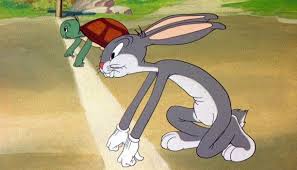
Most of us are familiar with the story of 'The Tortoise and the Rabbit,' but there are some surprising and insightful parallels that can be drawn between this famous fable and the world of trading.

The story begins with a tortoise and a rabbit setting out on a race. The rabbit is of course much faster, so he zooms off ahead while the tortoise slowly plods along.

There are some variations of the story but thinking he has plenty of time to spare, the rabbit stops to enjoy some carrots and take a nap.
Much to the rabbit's chagrin, the tortoise has been gradually making his way towards the finish line, overtaking the napping rabbit and winning the race.
A story of consistency
The basic message to take from this is that consistency and hard work often lead to greater achievements than physical advantages or privileges of some kind.
This also illustrates the importance of remaining mindful of "the long game" rather than focusing solely on potential short-term gains.
So how exactly does this relate to traders?
Slow and steady wins the race
If you're honest with yourself you have probably already figured out whether you are a rabbit or a tortoise when it comes to your trading approach.
A rabbit may typically rush in with high-frequency trading, over-leveraging their account and ultimately making decisions that are based on emotion rather than patience.
After a couple of successful trades, rabbits become overly confident, increasing their risk while placing too much emphasis on their imagined trading abilities.
This decreased risk aversion may lead to increased losses, which may end up with rabbits either spinning their wheels or getting knocked out of the 'race' altogether.
A tortoise, on the other hand, will remain patient in the face of tempting trades.
This means the tortoise will adopt a long-term trading strategy with a lower overall frequency of trades. This also means never over-leveraging his account or doubling up his risk because of a sudden surge of confidence off the back of a few lucrative trades.

Channel your inner tortoise
As silly as it might sound, there is a lot to be learnt from this children's tale.
Consistency coupled with a clear grasp of long-term thinking may help to greatly preserve your trading capital.
If you do enjoy a string of successful trades, don't let this go to your head.
While you may feel excited and extremely confident, it is still wise to hold fire until you see obvious trades.
You might feel like luck is on your side but when this happens, channel your inner tortoise and your portfolio will thank you in the long term!
Trading is not a sprint, it is a marathon, so avoid making rash short-term decisions and instead remember that consistency is the number one factor that will allow you to gradually increase your capital.
Tortoise trading might be what will keep you in profit quarter after quarter; year after year!


Friday, 13 January 2017

The story of a woodcutter

The story of a woodcutter


Once upon a time, a very strong woodcutter asked for a job in a timber merchant and he got it. The pay was really good and so was the work condition. For those reasons, the woodcutter was determined to do his best.His boss gave him an axe and showed him the area where he supposed to work.


The first day, the woodcutter brought 18 trees.


“Congratulations,” the boss said. “Go on that way!”


Very motivated by the boss words, the woodcutter tried harder the next day, but he could only bring 15 trees. The third day he tried even harder, but he could only bring 10 trees. Day after day he was bringing less and less trees.
“I must be losing my strength”, the woodcutter thought. He went to the boss and apologized, saying that he could not understand what was going on.


“When was the last time you sharpened your axe?” the boss asked.


“Sharpen? I had no time to sharpen my axe. I have been very busy trying to cut trees…”


Reflection:

Our lives are like that. We sometimes get so busy that we don’t take time to sharpen the “axe”. In today’s world, it seems that everyone is busier than ever, but less happy that ever.
Why is that? Could it be that we have forgotten how to stay “sharp”? There’s nothing wrong with activity and hard work. But we should not get so busy that we neglect the truly important things in life, like our personal life, taking time to get close to our Creator, giving more time for our family, taking time to read etc.
We all need time to relax, to think and meditate, to learn and grow. If we don’t take the time to sharpen the “axe”, we will become dull and lose our effectiveness. 
Author: Stephen Covey
From: 7 Habits of Highly Effective People
                                                                                                                                                     

Sunday, 1 January 2017

Trading Holidays for NSE, BSE & MCX

Sr. NoHolidaysDateDay
1Republic DayJanuary 26, 2017 Thursday
2MahashivratriFebruary 24, 2017 Friday
3HoliMarch 13, 2017 Monday
4Ram NavamiApril 04, 2017 Tuesday
5Good Friday April 14, 2017 Friday
Dr.Baba Saheb Ambedkar Jayanti April 14, 2017 Friday
6Maharashtra Day May 01, 2017 Monday
7Id-Ul-Fitr (Ramzan Id) June 26, 2017 Monday
8Independence Day August 15, 2017 Tuesday
9Ganesh Chaturthi August 25, 2017 Friday
10Mahatama Gandhi Jayanti October 02, 2017 Monday
11Diwali-Laxmi Pujan* October 19, 2017 Thursday
12Diwali-Balipratipada October 20, 2017 Friday
13Christmas December 25, 2017 Monday
*Muhurat Trading will be conducted on Thursday, October 19, 2017 (Diwali- Laxmi Pujan). Timings for Muhurat Trading will be notified by the exchange subsequently.

Holidays On Saturday/Sunday

Sr. NoHolidaysDateDay
1Mahavir JayantiApril 09, 2017Sunday
2Bakri IDSeptember 02, 2017Saturday
3DaseraSeptember 30, 2017Saturday
4MoharramOctober 01, 2017Sunday
5Gurunanak JayantiNovember 04, 2017Saturday

Holidays For Currency Trading And Clearing & Settlement

In addition to the NSE and BSE holidays, the following holidays were announced for Currency Trading and for Clearing & Settlement.You can check out the official list here.
Sr.NoHolidaysDateDay
1Chhatrapati Shivaji Maharaj JayantiFebruary 19, 2017Sunday
2Annual Bank ClosingApril 01, 2017Saturday
3Gudhi PadwaMarch 28, 2017Tuesday
4Parsi New YearAugust 17, 2017Thursday
5Id-e-MiladNovember 30, 2017Thursday
Official holiday calendar for NSE. Official holiday calendar for BSE.

Holidays For Commodity Trading- MCX/NCDEX

Sr.NoHolidaysDateDayMorning SessionEvening Session*
1New Year’s Day01-Jan-17SundayOpenClosed
2Republic Day26-Jan-17ThursdayClosedClosed
3Mahashivratri24-Feb-17FridayClosedOpen
4Holi (2nd Day)13-Mar-17MondayClosedOpen
5Good Friday14-Apr-17FridayClosedClosed
Ambedkar Jayanti14-Apr-17FridayClosedOpen
6Ram Navami04-Apr-17TuesdayClosedOpen
7Mahavir Jayanti09-Apr-17SundayClosedOpen
8Maharashtra Day01-May-17MondayClosedClosed
9Buddha Poornima10-May-17WednesdayClosedClosed
10Ramzan Id26-June-17MondayClosedOpen
11Independence Day15-Aug-17TuesdayClosedClosed
12Ganesh Chaturthi25-Aug-17FridayClosedOpen
13Bakri Id02-Sep-17SaturdayClosedOpen
14Gandhi Jayanti02-Oct-17MondayClosedClosed
15Dassera30-Sep-17SaturdayClosedOpen
16Moharum01-Oct-17SundayClosedOpen
17Diwali – Lakshmi Puja19-Oct-17ThursdayClosedOpen**
18Diwali – Balipratipada20-Oct-17FridayClosedOpen
19Guru Nanak Jayanti04-Nov-17SaturdayClosedOpen
20Id-E-Milad30-Nov-17ThursdayClosedOpen
21Christmas25-Dec-17MondayClosedClosed

Friday, 9 December 2016

Monkeys & Goats – To Convince You To Buy Stocks of Only Good Businesses

So there was this village where one day a man appeared and said that he wanted to buy monkeys. He said that he would pay Rs 100 per monkey. The villagers caught all the monkeys in the neighbourhood and sold them to him for a hundred rupees each. Soon another man appeared and said that he would pay Rs 200 for each monkey. But there weren't any more monkeys around. They were all owned by the first man. So the villagers went to him and said that they were willing to take the monkeys back and return his money. But the monkey owner was unwilling to sell. The villagers raised the offer price to Rs 150 per monkey, then Rs 175 and finally to Rs 199 but the man just didn't want to sell, even though he clearly didn't have any use for the monkeys. Eventually, just to see whether he would sell, they offered him Rs 200 but he still refused.


The villagers were puzzled by this. Finally, one of them figured out that there must be someone else who was going to come to the village and offer even more money for the monkeys. Convinced that this was the real explanation, they went and offered the man Rs 300 for each monkey and sure enough the man accepted. Joyous at having landed such a good deal, they quickly paid him off before he changed his mind and took possession of the monkeys. The man went away with his money and lived happily ever after. The villagers waited for the next buyer. And waited… And waited... But no one ever appeared who wanted to buy a monkey.
But wait.

If you think you've guessed the moral of the story, you are wrong because the story isn't over yet.

There was another village nearby. In this village a man appeared one day and offered Rs 1000 each for a goat. Now goats were valuable, but not as much as a thousand rupees so the villagers sold the goats to this man. A similar thing happened here too. A second man appeared, offered Rs 2000 for each goat, the first man refused and eventually the villagers ended up buying the goats back for Rs 3000 each. Here too, the two men disappeared and no one ever came and offered so much money for a goat again.


But there was a difference.

Goats aren't monkeys. They could be milked every day and the milk was good and healthy. Even the goat droppings could be used as fuel (not sure of it though). When the goats eventually grew too old to be milked, the villagers could kill them for mutton. All in all, it wasn't a complete disaster.

But the monkey-owners were not so lucky. Since these weren't demat monkeys, they actually had to be kept in one's house. The monkeys ate too much, shouted and shrieked all day and sometimes bit people.

Eventually, when it became clear that the monkeys were worthless, their owners abandoned them and tried to forget about their losses.


And that's the Moral of the Story.

In the stock markets today, there are good companies that are overpriced and there are worthless companies that are overpriced. If you are going to be a fool and pay absurd prices because you think that a greater fool will appear in the future, make sure you buy a goat and not a monkey .

Friday, 25 November 2016

What is Rights Issue of a Share ?


Rights Issue

Rights issues are the shares issued by a company only to its existing shareholders which are cheaper than its current market price. Sometimes a company come out with a batch of new shares and may choose to not go the public (like IPO). A company may just approach only the existing shareholders (those who own the shares of that company) for the same. These shares are called a rights issue. In other words, only the existing shareholders have a right to buy these shares.
Example : If the market price of the share is Rs 200, the company may offer the rights issue shares for Rs 180. So if you are an existing shareholder, you get more shares at a cheaper rate than the market.

Will the Share Prices Go Up?

Normally, the price will go up because investors now want to buy the shares so that they can benefit from the rights issue.

Rights Issues are not Free


These shares do not come free like bonus shares. A Bonus share is offered free of cost. They are like a gift (bonus). Rights issue will need you to buy the shares.

How many Rights issue shares will I get?


Rights issue are always offered in proportion to your existing share holding. A company may come out with a 2 for 1 rights issue. This means that, it will give the shareholder who has 1 share, the chance to buy 2 additional shares. So, if you have 50 shares, you will get the chance to buy 100 additional shares, at a cheaper price.

What if I don’t want Rights Issue shares?

For a bonus share issue, you are just given the shares free of cost. While in the case of a rights issue, you are given the choice to decline, since you have to pay for it. You have the right to refuse to subscribe to these rights issue.

Is Rights Issue Good for me?

Only subscribe to a rights issue only if you really trust in the company’s performance. Don’t just buy it because you are getting it cheaper than the market price. Try to find out why the company is coming out with a rights issue. If the company needs this to raise money for a sound business plan that will eventually increase the profits and share price, then it is Good.

Tuesday, 8 November 2016

Rs 500 and Rs 1,000 notes scrapped: Govt releases FAQ to help you make sense of it all

1. Why is this scheme (in place)?
The incidence of fake Indian currency notes in higher denomination has increased. For ordinary persons, the fake notes look similar to genuine notes, even though no security feature has been copied. The fake notes are used for anti-national and illegal activities. High denomination notes have been misused by terrorists and for hoarding black money. India remains a cash based economy hence the circulation of Fake Indian Currency Notes continues to be a menace. In order to contain the rising incidence of fake notes and black money, the scheme to withdraw has been introduced.
2. What is this scheme?
The legal tender character of the notes in denominations of Rs 500 and Rs 1,000 stands withdrawn. In consequence thereof withdrawn old high denomination (OHD) notes cannot be used for transacting business and/or store of value for future usage. The OHD notes can be exchanged for value at any of the 19 offices of the Reserve Bank of India or at any of the bank branches or at any Head Post Office or Sub-Post Office.
Representational image. AFP
3. How much value will I get?
You will get value for the entire volume of notes tendered at the bank branches / RBI offices.
4. Can I get all in cash?
No. You will get upto Rs 4,000 per person in cash irrespective of the size of tender and anything over and above that will be receivable by way of credit to bank account.
5. Why I cannot get the entire amount in cash when I have surrendered everything in cash?
The Scheme of withdrawal of old high denomination (OHD) notes does not provide for it, given its objectives.
6. Rs 4000 cash is insufficient for my need. What to do?
You can use balances in bank accounts to pay for other requirements by cheque or through electronic means of payments such as Internet banking, mobile wallets, IMPS, credit/debit cards etc.
7. What if I don’t have any bank account?
You can always open a bank account by approaching a bank branch with necessary documents required for fulfilling the KYC requirements.
8. What if I have only JDY ( jan dhan yojna ) account?
A JDY account holder can avail the exchange facility subject to the caps and other laid down limits in accord with norms and procedures.
9. Where can I go to exchange the notes?
The exchange facility is available at all Issue Offices of RBI and branches of commercial banks/RRBS/UCBs/State Co-op banks or at any Head Post Office or Sub-Post Office.
10. Need I go to my bank branch only?
For exchange upto Rs 4,000 in cash you may go to any bank branch with valid identity proof.
For exchange over Rs 4,000, which will be accorded through credit to Bank account only, you may go to the branch where you have an account or to any other branch of the same bank.
In case you want to go to a branch of any other bank where you are not maintaining an account, you will have to furnish valid identity proof and bank account details required for electronic fund transfer to your account.


11. Can I go to any branch of my bank?
Yes you can go to any branch of your bank.
12. Can I go to any branch of any other bank?
Yes, you can go to any branch of any other bank. In that case you have to furnish valid identity proof for exchange in cash; both valid identity proof and bank account details will be required for electronic fund transfer in case the amount to be exchanged exceeds Rs 4,000.
13. I have no account but my relative/friend has an account, can I get my notes exchanged into that account?
Yes, you can do that if the account holder relative/friend etc gives you permission in writing. While exchanging, you should provide to the bank, evidence of permission given by the account holder and your valid identity proof.
14. Should I go to bank personally or can I send the notes through my representative?
Personal visit to the branch is preferable. In case it is not possible for you to visit the branch you may send your representative with an express mandate i.e. a written authorisation. The representative should produce authority letter and his/her valid identity proof while tendering the notes.
15. Can I withdraw from ATM?
It may take a while for the banks to recalibrate their ATMs. Once the ATMs are functional, you can withdraw from ATMs upto a maximum of Rs 2,000 per card per day upto 18 November, 2016. The limit will be raised to Rs 4,000 per day per card from 19 November, 2016 onwards.
16. Can I withdraw cash against cheque?
Yes, you can withdraw cash against withdrawal slip or cheque subject to ceiling of Rs 10,000 in a day within an overall limit of Rs 20,000 in a week (including withdrawals from ATMs) for the first fortnight ie upto 24 November, 2016.
17. Can I deposit withdrawn notes through ATMs, Cash Deposit Machine or cash Recycler?
Yes, OHD notes can be deposited in Cash Deposits machines / Cash Recyclers.
18. Can I make use of electronic (NEFT/RTGS /IMPS/ Internet Banking / Mobile banking etc.) mode?
You can use NEFT/RTGS/IMPS/Internet Banking/Mobile Banking or any other electronic/ non-cash mode of payment.
19. How much time do I have to exchange the notes?
The scheme closes on 30 December, 2016. The OHD banknotes can be exchanged at branches of commercial banks, Regional Rural Banks, Urban Cooperative banks, State Cooperative Banks and RBI till 30 December, 2016.
For those who are unable to exchange their Old High Denomination Banknotes on or before 30 December, 2016, an opportunity will be given to them to do so at specified offices of the RBI, along with necessary documentation as may be specified by the Reserve Bank of India.
20. I am right now not in India, what should I do?
If you have OHD banknotes in India, you may authorise in writing enabling another person in India to deposit the notes into your bank account. The person so authorised has to come to the bank branch with the OHD banknotes, the authority letter given by you and a valid identity proof (Valid Identity proof is any of the following: Aadhaar Card, Driving License, Voter ID Card, Pass Port, NREGA Card, PAN Card, Identity Card Issued by Government Department, Public Sector Unit to its Staff)
21. I am an NRI and hold NRO account, can the exchange value be deposited in my account?
Yes, you can deposit the OHD banknotes to your NRO account.
22. I am a foreign tourist, I have these notes. What should I do?
You can purchase foreign exchange equivalent to Rs 5,000 using these OHD notes at airport exchange counters within 72 hours after the notification, provided you present proof of purchasing the OHD notes.
23. I have emergency needs of cash (hospitalisation, travel, life saving medicines) then what I should do?
You can use the OHD notes for paying for your hospitalisation charges at government hospitals, for purchasing bus tickets at government bus stands for travel by state government or state PSU buses, train tickets at railway stations, and air tickets at airports, within 72 hours after the notification.
24. What is proof of identity?
Valid Identity proof is any of the following: Aadhaar Card, Driving License, Voter ID Card, Pass Port, NREGA Card, PAN Card, Identity Card Issued by Government Department, Public Sector Unit to its Staff.
25. Where can I get more information on this scheme?
Further information is available at our website (www.rbi.org.in)


Outlets that will accept Rs 1,000 and Rs 500 notes in next 72 hours 

1. Government hospitals will accept these notes from November 9 till November 11, and in government dispensaries with doctor's prescription. 

2. Old notes will be accepted for buying train and airline tickets. 

3. Government bus stops will accept these notes for the first 72 hours starting midnight of November 8, 2016. 

4. Old notes will be accepted at petrol, diesel and CNG stations run by public sector companies

5. Milk booths and crematoriums .. 

6. Cooperative shops, Kendriya Bhandar, ration shops, Safal shops and dairies recognised by the state government will accept Rs 500 and Rs 1,000 bank notes, but all of these entities will have to maintain a stock register. 

7. International airports will have the facility of exchanging the old notes for foreign tourists and those going to foreign nations till a limit of Rs 5000.